Tuesday, September 4, 2007

Better Models for the Masses?

It cannot be overstated that the quality of scale models (in this case, N, but generally any scale) is currently at an all-time high and still climbing. The steady advancement of technology has provided us with manufacturing capabilities unheard of just a couple of decades ago.

That said, what good is quality, one may rightfully argue, if accuracy is not keeping pace? This thorny, argument-inducing issue is loaded with valid points to make on behalf of folks on both sides of the fence.

In defense of the manufacturers, as in any business venture there's a point of diminishing returns. Even the largest model makers have finite budgets and resources. There is always a clear line in the sand beyond which the company begins to lose profitability on any given mass-produced product; the lower the development investment, the greater potential profit—and profit equals more goodies for us. It is therefore necessary for us to accept that there will be a "good enough" rule applied across the board. We must also expect to see at least some "fantasy schemes" so that products find the broadest possible market and generate the greatest ROI.

The "good enough" rule involves two aspects of production: research and tooling. There are just so many human-hours that can be invested in researching a model before the budget is blown. And as for tooling, there may be a point at which a scale-width hood becomes prohibitively costly to tool owing to hard stops such as motor size. Yes, it may be feasible to make the hood the right width, but that last six scale inches may come at the expense of a different, more costly motor or all-new tooling for a chassis that could have been recycled from another loco.

In defense of the modelers, many errors would cost nothing to correct: the right paint color or road number costs the same as paint of the wrong. As Mike Skibbe summed it up in a previous post, getting it right expands the potential market: it will then appeal to the prototype modelers as well as the casual consumers (which includes collectors) who enjoy the model just the way it is, warts and all.


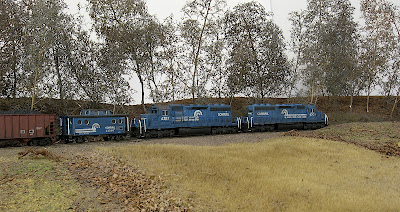
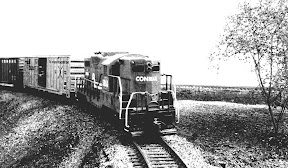
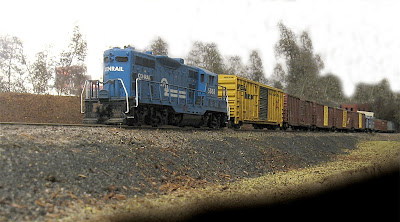
Let's take a specific example: for September 2007, Micro-Trains released a CP Rail 89-foot trailer flat loaded with intermodal containers, number 521135. However, this number is part of a series used for AAR type P782 81-foot flats (center photo, CP 521133). If they'd wanted to get closer to reality, they should have used a number between 5217XX and 5223XX, which appear on CP Rail AAR type P880 89-foot flats (bottom photo, CP 521719). Although the CP Rail cars have open decks, unlike the models, Micro-Trains could have improved matters a bit by positioning the containers at the extreme ends of the car. (Top photo, Micro-Trains; center and bottom photos, Joe Rogers, Railroad Pictures Archive.)

This information was obtained after just a few minutes of online searching. Which raises a curious issue: the Internet has become an incredibly potent research tool. It certainly cannot be a huge strain on a manufacturer to spend some quality time with Google, yet obvious and presumably avoidable discrepancies continue to appear time and again. As another example, the number boards on a soon-to-be-released diesel are off the mark, as several photographs of the real deal clearly illustrate. What is the reason for this oversight?

Once again, the manufacturer may have had any number of limitations imposed on the model's production; much goes on behind the scenes, out of our view. With respect to the number board problem, older tooling is being recycled. In other situations, getting absolutely every aspect of the model accurate may not be feasible given time and budget constraints. And, since most tooling is done overseas, there may be communications problems or quality control issues on the contractor's end. We could not hope to know all of the details.

Let us not overlook, too, the fact that tooling is an art form, despite being the domain of computers these days. Blueprints and photographs must be interpreted by humans before tooling can commence, and the results reflect the skill of those individuals responsible for the interpretation. Layer on the complicating factors of fitting everything over a mechanism designed by other engineers, and you have ample opportunities for the model to drift astray from reality. To see all of this in practical form, take three models of the same locomotive from three different manufacturers: they should all be identical, or nearly so, yet each is different—sometimes subtly, sometimes radically. Why? It's the quality of interpretation.

But take heart, as we may be witnessing an opportunity to make everyone happy, or perhaps at least happier. Online forums are being frequented by both manufacturers and their customers. This free exchange of information and perspective may provide the means for even better, more accurate models. But this assumes one thing: everyone remains civil. It seems inevitable that some hot-headed rivet-counter starts spouting off about how incredibly stupid everyone is at XYZ Company for having gotten the stenciling on a gondola wrong. If I were a manufacturer, I would not be inclined to go the extra mile to satisfy people like this. Would you?

All of this has given rise to one overarching question in the back of my mind: Why are some modelers getting so fussy? Our models are better-looking and more accurate than ever before. Are we becoming jaded? With a cornucopia of steadily-improving products, are we now beginning to expect too much? It used to be that prototype modelers were generally content to modify their models as needed to achieve accuracy. Now it seems some won't even buy a product unless it is perfect right out of the mold. What they don't seem to realize is that they're shooting themselves in the foot; not supporting a model maker reduces the chances of seeing more products, let alone better ones.

Tuesday, August 28, 2007

Post ModerN Modeling: Nothing is almost still too much

In my studies in college, we talked a lot about Post Modernism, the evolution and rejection of "modernism". It's tough to pin down a definition of "post modern", but this is the best I could pull from Wikipedia .

...postmodernism tends to refer to a cultural, intellectual, or artistic state lacking a clear central hierarchy or organizing principle and embodying extreme complexity, contradiction, ambiguity, diversity, and interconnectedness or interreferentiality.

I've realized that the rejection of traditional modeling concepts has driven me toward trying many different things in my modeling. While many traditional modelers will often try to pack as much "railroading" as possible into a space, I've been determined recently to do almost the exact opposite, and pack as little railroading into a space as possible.

I was presented many possibilities for my home layout when I began it. Many of these suggestions were that I needed "more" in the space. My good friend Lee has built an entire paper mill and junction on his layout (online at WMRYWesternlines.net) in the same square footage that I afforded to a ridge of trees.

This drive makes many things tricky, like incorporating any operational interest in a small space. I believe in making scenes as large as they deserve to be, and I find trying to scale these things down to manageable and modelable sizes is an even steeper challenge than I bet it is for many others out there.

Take my recent work on a oNeTRAK module for BANTRAK for example. I struggle to fit prototypical scenes into my door sized layout at home, but fitting something that I felt worth modeling into a 1'x4' module poised an even larger challenge. At first I thought about trying to model something very mundane, which is also part of what I feel makes my modeling thought post modern.

My first thought was just a stretch of track, on a slight embankment, like in Macungie PA or this scene at Strasburg. (Just look at how post modern THIS is, it's even of the rear of the engine!)

I had thought about doing something like a simple block signal. This is something that is barely ever done on a model railroad. It seems like every signal is there for an junction, an interlocking, or just for show. I thought that doing an intermediate, boring, block signal location would be a fun change of pace, and something novel. I may still revisit this in the future, as I still think it is an interesting idea.

After discussing the clubs needs though, I realized that what was more important was a "destination" scene. Somewhere that would make some sense for trains to be going to. I agonized with this though, because I'm not good at this type of thing. I'm too aware of the actual sizes of things in real life (thanks there Maps.Live.Com and your damn 3/4 view), and this was making coming up with a convincing concept difficult.

After pouring over some Conrail ZTS maps, I realized that the ideal "industry" to model wasn't an industry at all. It was an interchange. But even with this minimalist maximalist destination, I'm still struggling.

This all made me realized I'm really into modeling "nothing", that space between the scenes that everyone else is building. For every junction in real life, there are miles of boring straight track, that can be interesting in its details, but never gets any modeling attention. For every "hot spot" where 6 different lines all cross there are millions of more simple interlockings where it's a simple crossover between two tracks. For every bridge over a river, there are hundreds of more small bridges over creeks, and for each one of those, I'm betting there are 50 culverts over drainage ditches. I feel compelled to model more of these "mundane" things than the big ones. I'm not sure if this is just rebelliousness toward the modeling I was "brought up on" (and yes, I learned how to read with Model Railroader, and it took me a while to figure out that most of the world thought 2-8-2 actually meant negative eight), or maybe it's the desire to make a better representation of the real world in my modeling.

Either way, I can attest to this. It makes planning anything "operational" a real pain in the ass.

Thursday, August 2, 2007

Huberts: They're not LBF

People have been talking about Huberts Model Railroad Mfg Corp (http://www.hubertsrr.com/) a bit now, and I wanted to weigh in on the topic.

They're NOT LBF


Ok, with that said, here's the deal. LBF/McKean Models/WTF has been around for a long time in a number of incarnations. Each new name meant a new, well, I don't know what, but a new name, and I think a new way to avoid dealing with old problems. From my understanding, it wasn't the most financially solid, or savvy company around, and given the tough nature of the Model Train Biz, it never did that well. Each incarnation started out strong, but as time progressed, the business didn't, and it would fail.


Given this past yo-yo act, it's not surprising that many people (both consumers and retailers) are not apt to trust them. However, I've spoken with the guys from Huberts at the Timonium MD Show and they've been very clear that they purchased the tooling from LBF, but not the business, meaning that the people behind LBF, it's debts and its assets are NOT under their control.


I wish these guys the best. They have a good solid product (not quite as detailed as modern Atlas or Athearn stuff though) and a lineup of stuff not otherwise available. I wish their price point was somewhat lower, since $20 cars are a little out of my range, but I hope that these prices help them get off the ground and offer more good stuff.

Wednesday, August 1, 2007

Mike Skibbe Sums it Up

From a thread on Trainboard about new Z scale boxcars, Mike Skibbe summed up my feelings about many manufacturer shortcomings. Check this out.

There is a misnomer that "Prototype Modelers" and "Rivet Counters" take things too seriously and arn't having fun. Things couldn't be further from the truth. We have tons of fun doing what we do too. The fun just comes in different ways. This is similar to the on-going debates about Tony Koester/Bill Darnaby hard core operators vs roundy-round runners. Many people say, "Oh, too many rules and it's too much like real work, that would never be fun for me." And they are probably correct, maybe they never would enjoy it. But for those that are really into operations, it's fun to follow the rules! It's fun to treat running trains like it was a real job. It doesn't make either camp wrong, and it certainly doesn't mean either group is "eternally frustrated."


He continues, emphasis mine.
First, the NP geeps MTL just released. I read a review (Model Train News?) that said MTL used a number series on the NP that didn't have dynamic brakes, yet the model does have dynamics. The kicker is, that NP did own geeps with dynamic brakes! MTL just didn't use the right numbers. You say, "We can split hairs on what's "prototypical" or obvious structural differences, or we can strive to do the best we can with what we have and offer Road Names that help folks realize their dream layouts." Would it have cost any more to use the right number series on the NP geeps? Was using the wrong number really "striving to do the best with what's available"?

The N and Z scale RI 40' boxcars in pullman green are another example. MTL put a non-Pullman Standard built number series on their PS1 boxcar body. Yet RI also had a number series that is almost a perfect match for the PS1, with the exact same paint scheme. Doing it right satisfies both the everyday modeler and the prototype modeler. Doing it wrong only satisfies the every day modeler. Why leave out a portion of the customer base, when doing it right doesn't cost any more?


From http://www.trainboard.com/grapevine/showthread.php?t=89706&page=2

One of the best forum quotes in a while

Care of the wise Tom Mann:

It is a mystery: why are the Hallmark ornaments usable models, yet the houses made by micro-trains are not usable models?

In the new Z Scale forum on TheRailwire.net
http://therailwire.net/smf/index.php?topic=13183.0

The photo is of Robert Ray's using the aforementioned cars. What amazing work.